
This crockpot pork stew is the kind of dish that sneaks up on you with its warmth and simplicity. I love how the slow cooker turns tough, inexpensive cuts into fall-apart tender, flavorful bites without me hovering over the stove. It’s perfect for those evenings when I want comfort food but don’t want to spend hours cooking.
The magic is in how the steady, gentle heat melds the spices and pork juices, creating a rich, savory broth that feels like a hug in a bowl. It’s a set-it-and-forget-it kind of recipe, making it a go-to after a busy day when I just want to come home to something hearty and real. This stew has become a quiet favorite in my kitchen, especially during chilly seasons.
This recipe is built around the idea of using the slow cooker to develop deep flavors with minimal effort, making it perfect for busy weeknights. I love how the low, steady heat melds the spices and tenderizes the pork without fuss. It’s about that quiet magic of set-it-and-forget-it, especially when you want something warm and satisfying without standing over the stove.
The story behind this recipe
- This recipe came about on a chilly weekend when I was craving something hearty but didn’t want to fuss over a complicated meal. I had a handful of pork shoulder in the fridge and a few root vegetables that needed using up. The slow cooker seemed like the perfect way to coax out all those deep, cozy flavors without much effort.
- I remember the first time I made it, the smell filling the house all afternoon—meaty, smoky, with a hint of thyme and garlic. It felt like a small victory, turning simple ingredients into something that tasted like it simmered all day on a stove. That quiet magic of slow cooking, where the ingredients develop richness and tenderness, keeps drawing me back to this dish.
- heading: The story behind this recipe
Ingredient breakdown: key components
- Pork shoulder: I love how it becomes melt-in-your-mouth tender after hours in the crockpot. You can use pork loin, but it might be a bit less juicy and fall-apart.
- Carrots: Their sweetness intensifies as they cook, releasing a fragrant aroma that balances the savory broth. If you prefer a milder flavor, cut back on the quantity.
- Onions: I find they add a depth of flavor and natural sweetness. Sautéing them first isn’t necessary—just toss them in raw for simplicity, but caramelizing adds richness.
- Garlic: The aroma when it hits the hot stew is irresistible—bright and pungent. If you’re sensitive to strong garlic, halve the amount or add it later in cooking.
- Broth: I use chicken or vegetable broth for a lighter touch, but beef broth lends a richer, more robust flavor. Make sure it’s low sodium if you’re watching salt.
- Herbs & spices: Thyme and bay leaves are staples, but a dash of smoked paprika adds a smoky depth. Adjust spices based on your mood—more heat or earthiness.
- Thickening agents: I often stir in a bit of flour or cornstarch at the end to give the stew a velvety finish. If you prefer it lighter, skip this step and serve it brothier.
Spotlight on key ingredients
Pork shoulder:
- I love how it becomes melt-in-your-mouth tender after hours in the crockpot. You can use pork loin, but it might be a bit less juicy and fall-apart.
- Carrots: Their sweetness intensifies as they cook, releasing a fragrant aroma that balances the savory broth. If you prefer a milder flavor, cut back on the quantity.
- Onions: I find they add a depth of flavor and natural sweetness. Sautéing them first isn’t necessary—just toss them in raw for simplicity, but caramelizing adds richness.
Broth and herbs:
- Broth: I use chicken or vegetable broth for a lighter touch, but beef broth lends a richer, more robust flavor. Make sure it’s low sodium if you’re watching salt.
- Herbs & spices: Thyme and bay leaves are staples, but a dash of smoked paprika adds a smoky depth. Adjust spices based on your mood—more heat or earthiness.
Notes for ingredient swaps
- Pork Shoulder: I prefer the marbling and tenderness, but pork loin can work if you want a leaner stew—just be careful not to overcook it, or it’ll dry out.
- Carrots: Fresh carrots add sweetness and a snap, but frozen or roasted carrots can be a quick swap—just reduce cooking time slightly.
- Onions: Yellow onions give a mellow sweetness, yet shallots or leeks can add a different aromatic layer if you’re feeling adventurous.
- Garlic: Fresh garlic is best for that punch of aroma, but garlic powder works in a pinch—use half as much to avoid overpowering the stew.
- Broth: Chicken broth keeps it light, but beef broth lends a deeper, richer flavor; veggie broth is a good option for a lighter or vegetarian version.
- Herbs & Spices: Fresh thyme is ideal, but dried thyme or rosemary can stand in. Smoked paprika adds depth—skip if you prefer milder flavors.
- Thickening Agents: Flour or cornstarch both work; arrowroot is a good gluten-free alternative that thickens without cloudiness. Skip if you prefer a brothy stew.
Equipment & Tools
- Large slow cooker: Main vessel for slow cooking the stew.
- Sharp knife: Prep the pork and vegetables efficiently.
- Cutting board: Provide a stable surface for chopping.
- Wooden spoon: Stir the ingredients gently during cooking.
- Measuring cup: Ensure accurate liquid measurements.
Step-by-step guide to crockpot pork stew
- Gather your equipment: a large slow cooker, a sharp knife, a cutting board, a wooden spoon, and a measuring cup. The slow cooker is your main tool, turning raw ingredients into tender stew.
- Prep the pork: trim any excess fat, then cut into 2-inch chunks. Season lightly with salt and pepper. This helps each piece absorb flavors evenly.
- Chop vegetables: peel and dice 2 carrots, 1 large onion, and 2 celery stalks into bite-sized pieces. They’ll soften and sweeten during slow cooking.
- Layer ingredients: place pork chunks in the bottom of the slow cooker. Top with vegetables, garlic (minced), bay leaves, and sprigs of thyme for aromatic depth.
- Add liquids: pour in 4 cups of chicken or vegetable broth. Ensure ingredients are mostly covered; add a splash of soy sauce or Worcestershire for umami if you like.
- Set the cooker: cover and cook on low for 6–8 hours. The aroma will start to fill the house—meaty, fragrant, inviting. If you need it sooner, high for 4 hours works, but slow and low yields tenderest results.
- Check for doneness: after cooking, test the pork with a fork; it should be fall-apart tender. Vegetables should be soft and the broth rich and slightly thickened.
- Finish the stew: if you want a thicker gravy, stir in 1 tablespoon of cornstarch mixed with cold water. Cook on high for 10 more minutes until it shimmers and coats the back of a spoon.
- Rest and serve: let the stew rest for 10 minutes. Remove bay leaves and thyme sprigs. Ladle into bowls, garnish with chopped parsley if desired, and enjoy the warm, smoky aroma.
- Checkpoints & How to Know It’s Done: Probe the pork; it should be 75°C (165°F). Vegetables will be melting but still hold shape. Broth should be slightly thickened and glossy.
Let the stew sit off heat for 10 minutes to deepen flavors. Remove bay leaves and thyme sprigs. Serve hot, with crusty bread or over mashed potatoes for a cozy meal.
How to Know It’s Done
- Pork probe temp: 75°C (165°F), tender and falling apart.
- Vegetables: soft and fragrant, with a slight caramelized edge.
- Broth: rich, slightly thickened, coats the spoon.
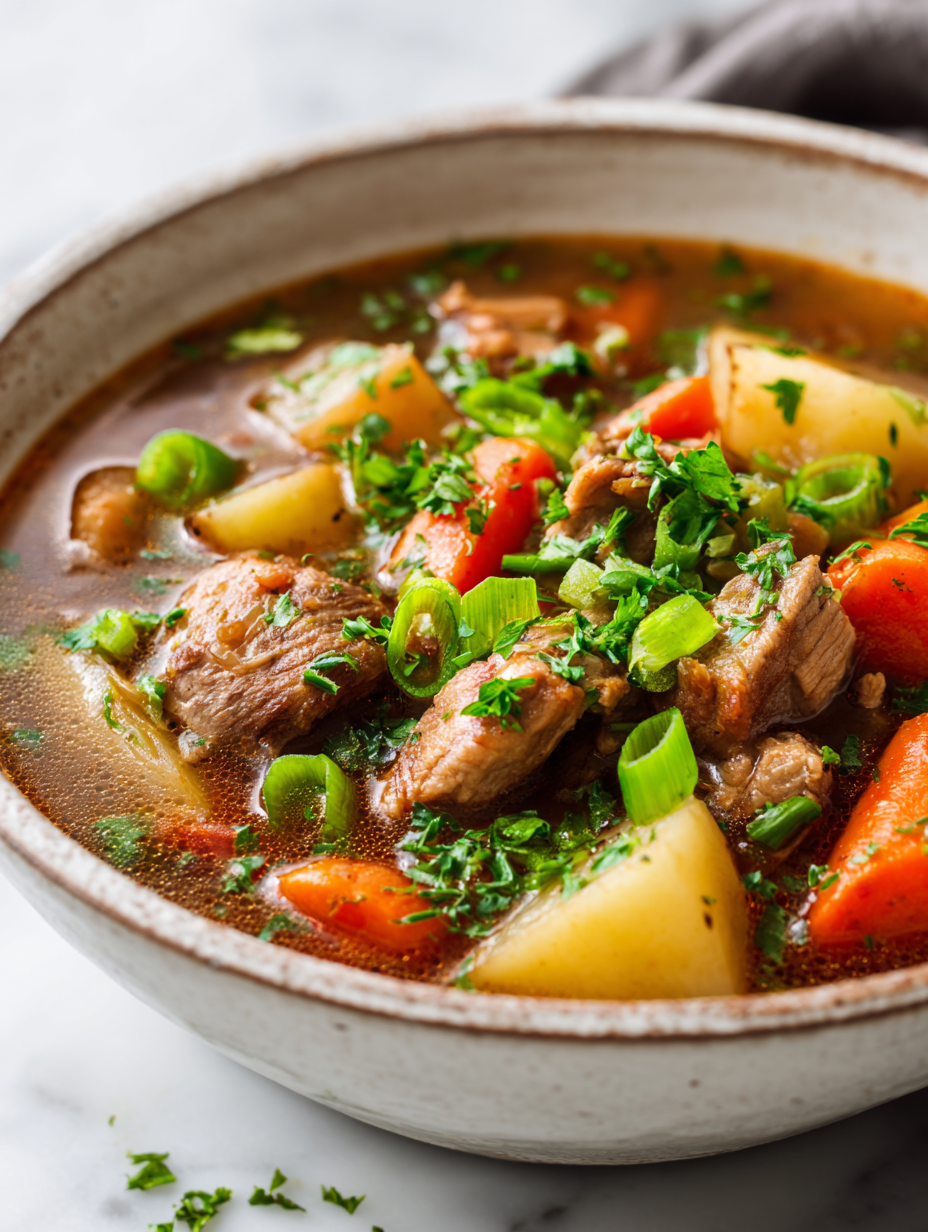
Crockpot Pork Stew
Ingredients
Equipment
Method
- Start by trimming excess fat from the pork shoulder, then cut it into roughly 2-inch chunks. Season lightly with salt and pepper.
- Peel and dice the carrots, dice the onion, and chop the celery into small pieces. These vegetables will add sweetness and depth to the stew.
- Place the pork chunks in the bottom of your slow cooker. Top with the diced vegetables and add the minced garlic, thyme, bay leaves, and smoked paprika for aromatic flavor.
- Pour in the broth, making sure the ingredients are mostly covered. This will create a flavorful, savory base for the stew.
- Cover the slow cooker and set it to low for 6–8 hours. As it cooks, the pork will become tender and the broth will develop rich, deep flavors with a fragrant aroma filling your kitchen.
- Once the cooking time is up, check that the pork is fall-apart tender by piercing with a fork. Remove the bay leaves and thyme sprigs.
- To thicken the stew, mix the cornstarch with a few tablespoons of cold water to make a slurry. Stir this into the hot stew and cook on high for another 10 minutes until it thickens and becomes velvety.
- Give the stew a gentle stir, then let it rest for 10 minutes to allow the flavors to deepen. Taste and adjust seasoning with salt and pepper as needed.
- Serve the hearty stew in bowls, garnished with fresh herbs if desired, and enjoy the comforting aroma and tender bites of pork and vegetables.
Notes
Pro Tips for Perfect Stew
- Bolded Mini-Head: Sear the pork quickly before slow cooking to lock in flavor and add a caramelized layer.
- Bolded Mini-Head: Layer ingredients carefully—meat at the bottom, vegetables on top—to ensure even cooking and flavor distribution.
- Bolded Mini-Head: Use the ‘low’ setting for 6–8 hours; the gentle heat makes the pork fall-apart tender and flavorful.
- Bolded Mini-Head: Stir in a slurry of cornstarch and cold water during the last 10 minutes for a velvety, thickened stew.
- Bolded Mini-Head: Let the stew rest off heat for 10 minutes before serving to deepen flavors and prevent separation.
- Bolded Mini-Head: If the stew looks thin, simmer uncovered on high for 10 minutes to reduce and concentrate the broth.
- Bolded Mini-Head: Add fresh herbs at the end for bright aroma—parsley or thyme enhances the rich, smoky depth.
Common mistakes and how to fix them
- FORGOT to brown the pork before slow cooking? Sear it first for richer flavor.
- DUMPED all ingredients in the slow cooker? Layer ingredients for even cooking and flavor meld.
- OVER-TORCHED the stew? Use low heat and check periodically to prevent burning or sticking.
- MISSED the resting step? Rest the stew for better flavor absorption and easier serving.
Quick fixes and pantry swaps
- If the stew looks too watery, splash in a cornstarch slurry and stir till thickened.
- When the pork isn’t tender enough, cover and cook on low for another 30 minutes.
- Patch over burnt spots by removing the burned layer and adding fresh broth.
- When the stew lacks flavor, add a splash of soy sauce or Worcestershire and simmer briefly.
- Splash a bit of vinegar if the broth tastes flat or dull, for a bright, balanced finish.
Prep, store, and reheat tips
- Prep the pork and chop vegetables the night before; store in airtight containers in the fridge for up to 24 hours. The aroma of raw garlic and herbs is fresh and pungent when prepped early.
- The stew can be made entirely in advance and stored in the fridge for 3-4 days. The flavors deepen overnight, with the broth becoming richer and more fragrant as it sits.
- Freeze leftovers in individual portions for up to 3 months. The pork may become slightly firmer upon thawing but still tender after reheating.
- Reheat gently on the stove over low heat, stirring occasionally. The aroma will reawaken with a smoky, savory scent, and the stew should shimmer with a velvety consistency. For microwave, heat in 30-second bursts, stirring in between, until steaming hot.
Top questions about crockpot pork stew
1. Do I need to brown the pork before slow cooking?
Searing the pork first adds a deeper, caramelized flavor, but you can skip it if you’re short on time. Just expect a slightly milder taste.
2. Should I peel or chop the vegetables beforehand?
Yes, chopping the vegetables into uniform pieces ensures even cooking and maximum flavor absorption.
3. How long should I cook the stew?
Using low heat for 6–8 hours really makes the pork melt-in-your-mouth tender. High heat shortens the cooking time but can toughen the meat if overdone.
4. Can I thicken the stew after cooking?
Yes, adding a cornstarch slurry at the end thickens the broth and gives it that velvety finish. If you prefer it brothy, skip this step.
5. Can I make this stew ahead of time?
Absolutely, the stew tastes even better the next day as the flavors meld and deepen. Store in an airtight container in the fridge for up to 3 days.
6. How should I store leftovers?
Yes, you can freeze leftovers in airtight containers for up to 3 months. Thaw overnight in the fridge before reheating.
7. How do I reheat the stew?
Reheat gently on the stove over low heat, stirring occasionally. The aroma of warm spices and savory broth will reawaken beautifully.
8. What if my stew is too salty?
If the stew turns out too salty, add a splash of vinegar or a pinch of sugar to balance the flavors. Diluting with a bit of fresh broth also helps.
9. How do I know when it’s done?
Overcooking can make the pork dry. Check for tenderness around 6 hours on low; it should fall apart easily when pierced with a fork.
10. Can I add herbs or spices after cooking?
Add fresh herbs like parsley or thyme at the end for a bright, aromatic finish that enhances the smoky, savory flavors.
This crockpot pork stew isn’t just a cozy comfort; it’s a reminder that simple ingredients, slow heat, and patience can create something truly satisfying. When the house fills with that smoky, savory aroma, I know I’ve got a quiet moment of warmth waiting for me at the table.
It’s a dish that’s easy to love, especially on busy days or when I crave something hearty without the fuss. Cooking it slowly makes the flavors deepen, and reheating only enhances that rich, meaty goodness. It’s a humble, honest meal I keep coming back to.