
Using leftover roast chicken for this crockpot soup feels like giving new life to what’s already been cooked with care. It’s a lazy Sunday kind of meal—no fuss, just dump everything in and forget about it. The aroma that fills the kitchen is a comforting reminder that good food doesn’t have to be complicated.
This recipe is a nod to those busy days when you want something hearty but don’t want to spend hours in the kitchen. The slow cooker does the heavy lifting, turning bits of chicken and simple vegetables into something surprisingly rich and satisfying. It’s the kind of soup that tastes like it’s been simmering all day, but really, it’s just a few easy steps.
Using leftover roast chicken for an even richer, more flavorful soup without extra fuss.
The story behind this recipe
- This recipe was born out of a lazy afternoon experiment, using what I had in the fridge. I realized that leftover chicken, especially after a roast, can turn into something much more comforting than just cold slices. It’s a way to stretch that bird into a new meal without extra shopping or prep. Plus, the aroma of simmering herbs and chicken broth fills the house just right, making everyone feel like a Sunday chef—even on a weekday.
- I used to toss leftover chicken straight into salads, but then I wondered—what if it could be the star of a cozy soup?
- This dish reminds me of my childhood, sitting around the kitchen table, feeling cared for by simple, honest food.
Ingredient breakdown: key components
- Chicken: I prefer cooked, shredded leftover roast for richer flavor; try skinless chicken breasts if fresh. The meat should be juicy and tender, with a slight smoky aroma from roasting.
- Carrots: I dice them small for quick softening; you can add larger chunks for more texture. Look for bright orange, firm carrots that give a little when pierced.
- Celery: I slice thin for even cooking, but you can go thicker if you like more crunch. The crisp, green stalks should smell fresh and have a slight snap when broken.
- Onions: I use yellow onions, chopped fine, to melt into the broth and sweeten it. They should be fragrant and slightly translucent after sautéing, with a hint of caramelization.
- Herbs: I toss in fresh thyme and parsley at the end for brightness; dried works too, but fresh gives a vibrant, aromatic punch. The herbs release a fragrant, herbal steam as they cook.
- Broth: I use a good-quality chicken stock, preferably homemade or low-sodium. It should smell savory and rich, with a slightly smoky undertone, ready to envelop the other ingredients.
- Seasonings: I add salt, pepper, and a splash of lemon juice for brightness. Adjust salt at the end, and taste for a fresh, zesty finish that lifts the whole bowl.
Spotlight on key ingredients
Chicken:
- I prefer cooked, shredded leftover roast for richer flavor; try skinless chicken breasts if fresh. The meat should be juicy and tender, with a slight smoky aroma from roasting.
- Carrots: I dice them small for quick softening; you can add larger chunks for more texture. Look for bright orange, firm carrots that give a little when pierced.
- Herbs: I toss in fresh thyme and parsley at the end for brightness; dried works too, but fresh gives a vibrant, aromatic punch. The herbs release a fragrant, herbal steam as they cook.
Broth:
- I use a good-quality chicken stock, preferably homemade or low-sodium. It should smell savory and rich, with a slightly smoky undertone, ready to envelop the other ingredients.
- Onions: I use yellow onions, chopped fine, to melt into the broth and sweeten it. They should be fragrant and slightly translucent after sautéing, with a hint of caramelization.
Notes for ingredient swaps
- Dairy-Free: Skip milk or cream; use coconut milk for a subtly sweet, tropical note that enriches the broth.
- Low-Sodium: Use homemade or low-sodium stock to control salt; add herbs and lemon to brighten the flavor.
- Vegetarian: Replace chicken with hearty mushrooms like shiitake or portobello, which add umami and meaty texture.
- Gluten-Free: Ensure broth and any added seasonings are gluten-free; skip thickening agents that contain gluten if desired.
- Spicy Kick: Add a pinch of cayenne or hot sauce to reach your preferred heat level, balancing with lemon for brightness.
- Herb Variations: Swap thyme and parsley for fresh dill or cilantro, which bring unique aroma and freshness.
- Vegetables: Use parsnips or sweet potatoes instead of carrots for a sweeter, earthier flavor profile.
Equipment & Tools
- Slow cooker: Main cooking vessel for slow simmering.
- Cutting board: Prepping ingredients safely and efficiently.
- Sharp knife: Chopping vegetables and shredding chicken.
- Stirring spoon: Mixing ingredients during cooking.
- Ladle: Serving the soup.
Step-by-step guide to crockpot chicken soup
- Gather all equipment: a slow cooker, a large cutting board, a sharp knife, a stirring spoon, and a ladle for serving.
- Prepare ingredients: shred leftover cooked chicken into bite-sized pieces, dice carrots and chop celery finely, and chop onions.
- In the slow cooker, add the shredded chicken, diced carrots, chopped celery, and onions.
- Pour in the chicken broth, enough to cover the ingredients by about 2 inches. Turn the slow cooker to low.
- Add salt, pepper, and a splash of lemon juice. Stir well to combine all flavors.
- Cover and cook on low for 6-8 hours, or until vegetables are tender and flavors meld.
- About 30 minutes before serving, stir in fresh or dried herbs: thyme and parsley.
- Check the soup’s seasoning—adjust salt and pepper if needed. The aroma should be fragrant, with herbs blooming.
- Once ready, turn off the slow cooker and let the soup rest for 10 minutes before serving, allowing flavors to settle.
- Ladle into bowls, garnish with extra herbs if desired, and enjoy the comforting warmth.
Allow the soup to rest for 10 minutes, then ladle into bowls. Garnish with fresh herbs if desired, and serve hot, savoring the fragrant steam and tender ingredients.
How to Know It’s Done
- Vegetables are tender and can be pierced easily with a fork.
- Soup smells fragrant with herbs and roasted chicken aroma.
- Broth is slightly thickened and flavorful, not watery or bland.
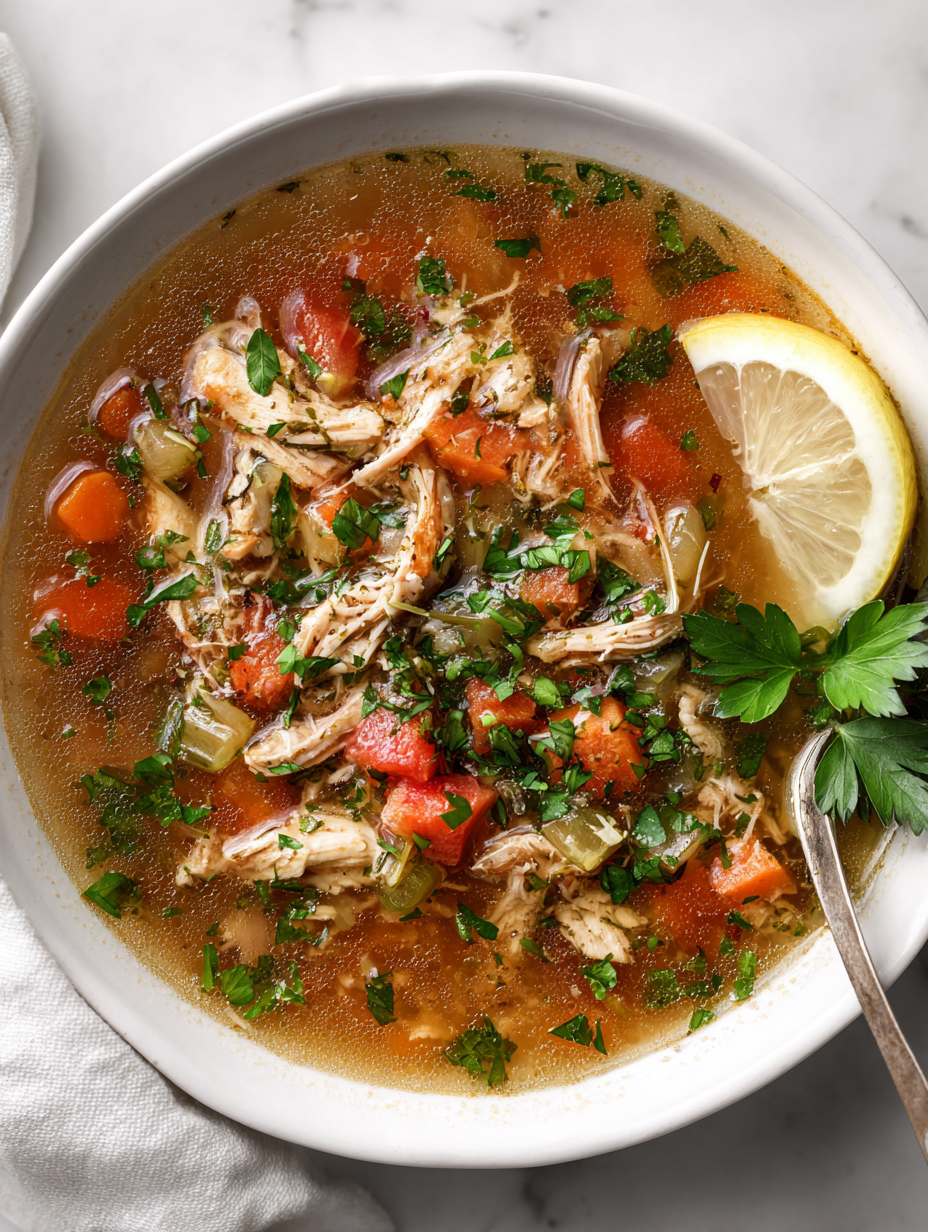
Leftover Roast Chicken Crockpot Soup
Ingredients
Equipment
Method
- Gather all your equipment: slow cooker, cutting board, sharp knife, stirring spoon, and ladle to make the process smooth and organized.
- Shred the leftover roast chicken into bite-sized pieces, feeling the juicy, tender texture as you pull it apart with two forks.
- Dice the carrots into small cubes and slice the celery thin, creating even pieces that will soften quickly and cook evenly.
- Chop the onion finely until it becomes fragrant and translucent when sautéed, releasing a sweet aroma that fills your kitchen.
- Add the shredded chicken, diced carrots, sliced celery, and chopped onions into the slow cooker, spreading them out evenly.
- Pour in the chicken broth, ensuring it covers the ingredients by about 2 inches, then sprinkle in dried thyme, and season with salt and pepper.
- Turn the slow cooker to low and cover with the lid, letting everything simmer gently for 6 to 8 hours until the vegetables are tender and the flavors meld together beautifully.
- About 30 minutes before serving, stir in freshly chopped parsley and a dash of lemon juice to brighten the flavors and add a fresh herbal aroma.
- Check the seasoning and adjust salt and pepper if needed, then turn off the slow cooker and let the soup rest for a few minutes for the flavors to settle.
- Use a ladle to serve the steaming soup into warm bowls, garnishing with extra parsley if desired, and enjoy the comforting aroma and tender ingredients.
Notes
Tips and Tricks for Best Results
- Bolded Tip: Sear aromatics briefly before adding liquids to deepen flavor and create a fragrant base.
- Bolded Tip: Use a splash of lemon juice just before serving to brighten the broth and enhance the herbs.
- Bolded Tip: Shred chicken with two forks for even, tender bites, avoiding stringy chunks in the soup.
- Bolded Tip: Layer herbs in the last 30 minutes to preserve their fresh aroma and vibrant green color.
- Bolded Tip: Adjust salt carefully at the end; the broth’s saltiness will intensify as it simmers.
- Bolded Tip: For a richer broth, add a small splash of olive oil or a pat of butter during the final stir.
- Bolded Tip: Keep the lid slightly ajar in the last hour to prevent over-accumulation of steam and maintain a clear broth.
Common mistakes and how to fix them
- FORGOT to check seasoning after cooking → Taste and adjust before serving.
- DUMPED all ingredients at once → Sauté aromatics first for depth.
- OVER-TORCHED the broth → Keep heat gentle after simmering starts.
- FAILED to shred chicken properly → Use two forks for even, tender strands.
Quick Fixes and Pantry Swaps
- If simmering smells weak, splash in a dash of soy sauce for umami boost.
- When broth is too watery, add a cornstarch slurry to thicken quickly.
- Splash some lemon juice if flavor feels dull or flat.
- Patch over-salted soup with a peeled potato for 10 minutes and discard.
- Shield delicate herbs from direct heat to preserve aroma and color.
Prep, store, and reheat tips
- Prep ingredients like shredding chicken and chopping vegetables the night before to save time and keep everything fresh in the fridge, smelling crisp and clean.
- Store the assembled ingredients in an airtight container in the fridge for up to 24 hours; the flavors meld and deepen overnight.
- The soup keeps well in the fridge for 3-4 days; reheated, it releases a fragrant aroma, and the vegetables soften further, becoming even more tender.
- Reheat gently on the stove over low heat, stirring occasionally; the broth should shimmer and steam softly. Avoid boiling to prevent overcooking the vegetables.
Top questions about crockpot chicken soup
1. Can I use fresh chicken instead of leftovers?
Use leftover roast chicken for richer flavor, but cooked chicken breasts work if fresh. Look for tender, juicy meat with a smoky aroma if roasted.
2. How long should I cook the soup in the crockpot?
Add vegetables early; they need about 6-8 hours on low. For softer carrots and celery, cook longer, but don’t overdo it to avoid mush.
3. Can I freeze leftovers?
Yes, you can freeze the soup in airtight containers for 3-4 months. Thaw overnight in the fridge and reheat until steaming hot, smelling fragrant.
4. How do I adjust the salt content?
Use low-sodium broth to control salt. Add extra herbs and lemon at the end to brighten the flavor if needed.
5. What if the soup is too thin?
If the soup is too watery, stir in a cornstarch slurry and cook on high for 10 minutes until thickened. For richer broth, add a splash of olive oil or butter.
6. Can I add pasta or rice?
Yes, you can add pasta or rice in the last 30 minutes. Cook until tender, but avoid overcooking to prevent mush.
7. When should I add herbs?
Use fresh herbs at the end for aroma and vibrancy. Dried herbs can be added earlier to deepen flavor but may lose some brightness.
8. Can I add dairy?
For a creamier soup, stir in a splash of milk or cream just before serving. Keep the heat low to avoid curdling.
9. Can I make it vegetarian?
Yes, you can replace chicken with hearty vegetables like mushrooms or add beans for extra protein and texture.
10. How do I know when it’s done?
Check the texture of the vegetables— they should be tender but not mushy. The broth should smell fragrant with herbs and roasted chicken aroma.
This crockpot chicken soup is more than just a meal; it’s a reminder of how simple ingredients can come together into something comforting and familiar. The aroma alone, with hints of herbs and roasted chicken, can turn any day around. It’s perfect for busy evenings or lazy weekends when you want a warm bowl without the fuss.
In the end, it’s about those small moments of satisfaction—scooping up tender chicken, soft vegetables, and fragrant broth. It’s a dish that feels like a warm hug, even on the most hectic days. And honestly, once you’ve got the hang of it, it’s hard to go back to boring soups.