
On busy nights, I find that slow-cooking a meal like this chicken and rice soup turns dinner into a small ritual of calm. There’s something about the gentle simmering, the way the flavors meld without much fuss, that makes the end result feel like a warm hug after a long day. It’s honest, straightforward comfort, built on humble ingredients that become something richer with time and patience.
This recipe is about more than just filling bellies; it’s about reclaiming a bit of peace in the chaos of life. I love how you can toss everything in the crockpot and forget about it for a few hours, knowing that when you come back, you’ll have something nourishing and familiar. It’s a simple act of kindness to yourself — knowing dinner is almost done while you breathe a little easier.
Focusing on how a simple, slow-cooked meal can become a comforting ritual for busy weeknights, turning everyday ingredients into something nourishing and nostalgic. This recipe is about embracing the unhurried moments, letting the crockpot do the work while you breathe easier, knowing dinner is almost ready.
The story behind this recipe
I stumbled onto this recipe during a particularly hectic week when I needed something warm and filling without the fuss. One lazy Sunday, I threw chicken, rice, and some veggies into the crockpot, hoping for a simple dinner. The aroma that filled the house as it cooked—soft chicken, fragrant herbs, and that comforting rice—made me realize how much I cherish these unpretentious, slow-cooked moments. It’s become my go-to for nights when I want nourishment without the chaos, a quiet reminder that good food doesn’t need to be complicated.
Ingredient breakdown: key components
- Chicken thighs: I prefer bone-in, skin-on for richer flavor and juiciness. You can swap with boneless, but expect slightly less depth.
- Long-grain rice: I use jasmine for a subtle floral note, but basmati or even brown rice works if you prefer nuttier texture or more fiber.
- Carrots: They add a gentle sweetness and color. If you’re out, parsnips or sweet potatoes can add a similar cozy vibe.
- Onion & garlic: These form the flavor base. Skipping garlic? Just add a pinch of onion powder for that aromatic punch.
- Broth: I lean toward chicken broth for that savory backbone, but veggie broth keeps it light. If you want smoky, try adding a dash of smoked paprika.
- Herbs & seasonings: Dried thyme and bay leaves are classic, but fresh parsley or dill at the end brightens everything. If you’re low on herbs, a squeeze of lemon can lift the dish.
- Optional add-ins: Frozen peas or spinach stirred in at the end give it a fresh, vibrant finish. If you don’t have them, a squeeze of lemon or a sprinkle of parmesan adds brightness.
Spotlight on key ingredients
Chicken thighs:
- I prefer bone-in, skin-on for richer flavor and juiciness. You can swap with boneless, but expect slightly less depth.
- Long-grain rice: I use jasmine for a subtle floral note, but basmati or even brown rice works if you prefer nuttier texture or more fiber.
- Carrots: They add a gentle sweetness and color. If you’re out, parsnips or sweet potatoes can add a similar cozy vibe.
Broth and herbs:
- Broth: I lean toward chicken broth for that savory backbone, but veggie broth keeps it light. If you want smoky, try adding a dash of smoked paprika.
- Herbs & seasonings: Dried thyme and bay leaves are classic, but fresh parsley or dill at the end brightens everything. If you’re low on herbs, a squeeze of lemon can lift the dish.
Notes for ingredient swaps
- Dairy-Free: Use coconut milk or omit altogether for a creamier or lighter soup. The flavor shifts to subtly sweet and coconutty if you go that route.
- Low-Sodium: Swap in low-sodium broth and skip added salt. The soup becomes milder, so adjust seasoning at the end to taste.
- Grains: Quinoa or cauliflower rice can replace rice. Quinoa adds a nuttier bite, cauliflower rice keeps it light and subtly vegetable-flavored.
- Herbs & Spices: Fresh herbs like parsley or dill can replace dried ones for a brighter, more delicate flavor. A pinch of smoked paprika boosts smoky depth if you skip thyme.
- Vegetables: Parsnips or sweet potatoes can stand in for carrots. They bring a different sweetness and texture but still add cozy warmth.
- Meat: Turkey or pork can replace chicken thighs. Keep in mind they may cook slightly differently, so adjust timing accordingly.
- Broth: Use vegetable broth for a vegetarian version, or add a splash of soy sauce or smoked paprika for extra depth and smoky notes.
Equipment & Tools
- Crockpot: Main cooking vessel for slow simmering
- Measuring cup: Accurate measurement of liquids
- Sharp knife: Chopping ingredients safely and evenly
- Cutting board: Prep surface for vegetables and chicken
Step-by-step guide to chicken and rice soup
- Gather your equipment: a large crockpot, a measuring cup, a sharp knife, and a cutting board. The crockpot is your main tool, so make sure it’s clean and functioning well.
- Prep the ingredients: dice 2 pounds of bone-in chicken thighs into bite-sized pieces, about 2.5 cm (1 inch). Chop 2 carrots into small rounds, mince 3 cloves garlic, and dice 1 small onion.
- Layer the ingredients: place the chicken in the crockpot first. Top with carrots, onion, garlic, and 1 cup of long-grain jasmine rice. Sprinkle with 1 tsp salt and ½ tsp black pepper.
- Add liquids: pour in 6 cups (1.4 liters) of chicken broth. It should almost cover the ingredients but not drown them. Toss in 2 bay leaves and a sprig of thyme if using fresh.
- Set the crockpot: cover with lid, cook on low for 6-8 hours or high for 4-5 hours. During cooking, the house will fill with a savory, chicken-and-herb aroma that’s comforting.
- Check for doneness: at about 6 hours on low, the chicken should be tender and easily shredded. The rice should be plump and soft, and vegetables tender but not mushy.
- Adjust seasoning: taste and add more salt or pepper if needed. Remove bay leaves and thyme sprig. If you like a slightly thicker soup, stir in a slurry of 1 tbsp cornstarch mixed with 2 tbsp cold water, then cook for another 10 minutes.
- Finish and serve: discard the bay leaves and thyme. Ladle into bowls, garnish with chopped parsley or a squeeze of lemon if desired. Serve hot, with crusty bread if you like.
- Rest briefly: let the soup sit for 5 minutes after cooking to settle flavors. Stir gently before serving to combine everything evenly.
Let the soup rest for 5 minutes after cooking. Discard bay leaves and herb sprigs. Stir gently to distribute flavors. Ladle into bowls, garnish as desired, and serve steaming hot.
How to Know It’s Done
- Chicken is tender and shreddable when tested with a fork.
- Rice is soft and slightly thickened, not watery.
- Vegetables are cooked through, with no raw crunch remaining.
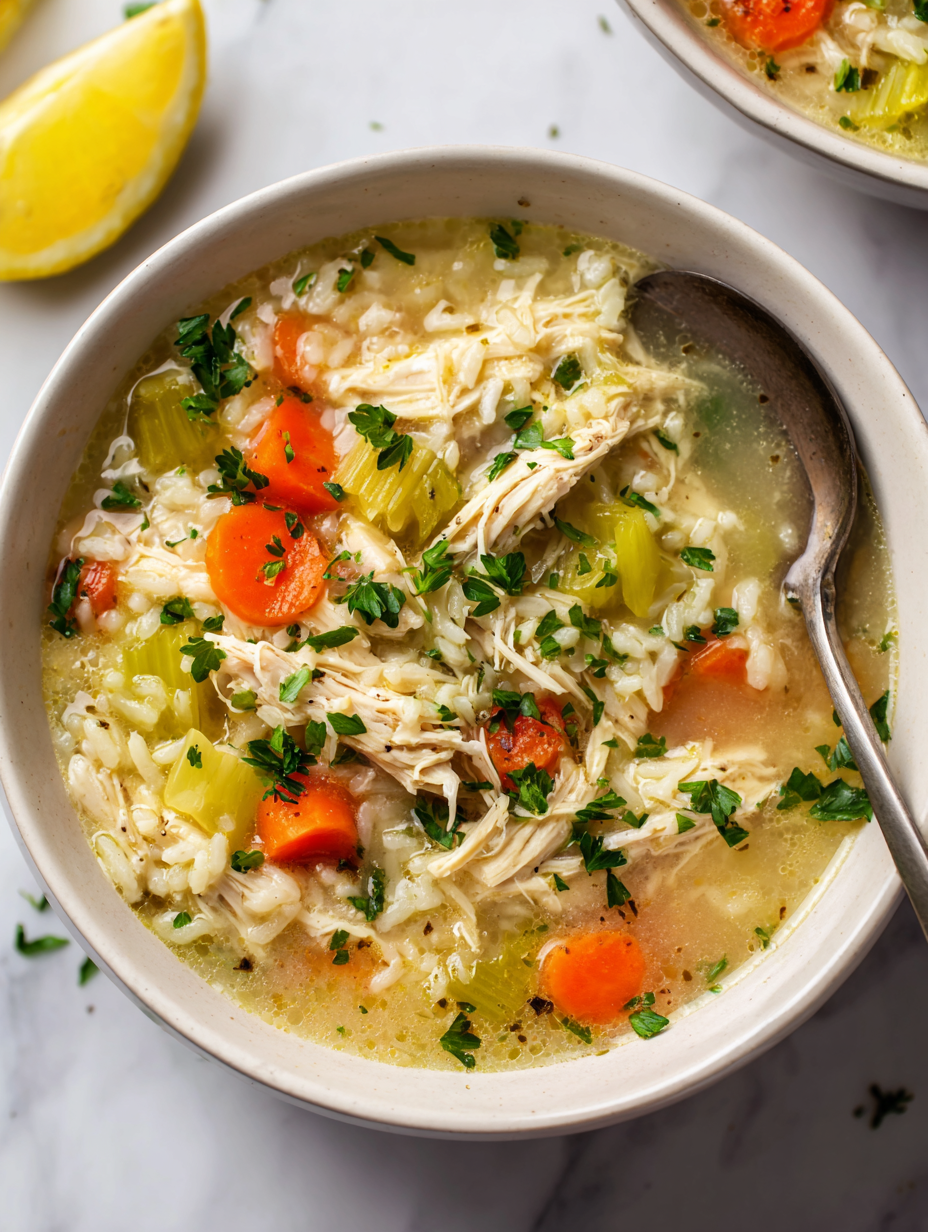
Slow-Cooked Chicken and Rice Soup
Ingredients
Equipment
Method
- Gather your equipment: your crockpot, measuring cup, sharp knife, and cutting board. Make sure the crockpot is clean and ready to go.
- Prep the ingredients: chop the carrots into small rounds, dice the onion, and mince the garlic. Cut the chicken thighs into bite-sized pieces, about 2.5 cm (1 inch).
- Layer the ingredients: place the chicken pieces at the bottom of the crockpot. Top with the diced carrots, onion, and minced garlic. Sprinkle in the dried thyme and season with salt and pepper.
- Add the rice: pour the jasmine rice evenly over the ingredients, spreading it out gently so it sits on top.
- Pour in the chicken broth: carefully add 6 cups of broth, almost covering the ingredients but leaving some space to prevent overflow. Toss in the bay leaves.
- Set the crockpot to low: cover with the lid and cook for 6 to 8 hours, or on high for 4 to 5 hours, until the chicken is tender and easily shreddable, and the rice is soft and plump.
- Check the soup: after cooking, remove the bay leaves. If you prefer a thicker soup, stir in a slurry of 1 tablespoon cornstarch mixed with 2 tablespoons cold water, then cook for an additional 10 minutes until slightly thickened.
- Taste and adjust seasoning: add more salt or pepper if needed. If desired, garnish with chopped fresh herbs or a squeeze of lemon for brightness.
- Serve the soup hot: ladle into bowls, ensuring each has tender chicken, fluffy rice, and flavorful broth. Enjoy this cozy, nourishing dish.
Tips & Tricks for Best Results
- & gentle: Use a low, steady heat to prevent rice from sticking or burning at the bottom.
- Layer wisely: Place chicken on the bottom for even cooking and flavor absorption.
- Smell test: When herbs release a fragrant aroma, it’s time to check the tenderness of the chicken.
- Timing is key: For perfectly tender chicken, aim for 6-8 hours on low — don’t rush it.
- Adjust at the end: If the soup seems thin, stir in a slurry of cornstarch and water, then simmer until thickened.
- Lift the lid carefully: Opening during cooking releases heat and moisture, so do it only when necessary.
- Finish with fresh: Adding herbs or lemon after cooking brightens the flavors and adds freshness.
Common mistakes and how to fix them
- FORGOT to adjust cooking time for smaller chicken pieces → Cut into uniform sizes for even cooking.
- DUMPED too much broth, resulting in watery soup → Use less broth initially, add more if needed after cooking.
- OVER-TORCHED the rice at the end → Stir gently and cook on low for best texture and flavor.
- SKIPPED removing bay leaves and thyme sprigs → Always discard before serving to avoid tough bites.
Quick fixes and pantry swaps
- When soup is too thick, splash in hot broth to loosen before serving.
- If rice is undercooked, patch with a quick 10-minute cook on high, adding more broth if needed.
- Splash a bit of lemon juice when aroma dulls for a fresh burst and brightness.
- Shield overcooked chicken with foil and simmer briefly to restore juiciness.
- DUMPED too much salt? Rinse chicken or add a potato to absorb excess salt for a quick fix.
Prep, store, and reheat tips
- Chopping vegetables and chicken can be done the night before; store in airtight containers in the fridge for up to 24 hours, keeping them fresh and ready to toss in.
- The soup can be cooked ahead and stored in the fridge for up to 3 days; the flavors deepen and the rice absorbs more broth, making it even more comforting when reheated.
- For longer storage, freeze in individual portions for up to 2 months; the texture might soften slightly, but the flavor remains cozy and familiar.
- Reheat gently on the stove over low heat, stirring occasionally. Sensory cues: smell fragrant, steam rising steadily, and the soup bubbling softly to ensure it’s heated through without drying out.
Top questions about crockpot chicken and rice soup
1. Can I use boneless chicken?
Use bone-in thighs for more flavor and juiciness, but boneless work if you prefer less fat. Expect slightly less richness with boneless.
2. Can I substitute brown rice?
Yes, brown rice takes longer to cook and might need extra broth and time. It also gives a nuttier flavor.
3. My soup is too thick or thin, what do I do?
If soup is too thick, add a splash of broth and stir gently. For thinner soup, cook uncovered for a few minutes.
4. Can I make this vegetarian?
Yes, swap chicken broth for vegetable broth or water with seasonings. The flavor will be lighter but still comforting.
5. Can I add other vegetables?
Add frozen peas or spinach in the last 10 minutes of cooking. They add freshness and color, brightening the dish.
6. Should I remove the herbs before serving?
Discard bay leaves and herb sprigs before serving. They can be tough and are not pleasant to bite into.
7. How do I reheat leftovers?
Reheat gently on the stove over low heat, stirring occasionally. Look for steam and a simmering sound to ensure it’s hot enough.
8. My rice isn’t cooked enough, what now?
If rice is undercooked, cook on high for 10 more minutes with a bit of broth, stirring occasionally.
9. How do I know when the chicken is done?
To avoid overcooking, check chicken around the 6-hour mark on low. It should be tender and shreddable.
10. Can I add herbs after cooking?
Use fresh herbs or a squeeze of lemon at the end for added brightness and flavor contrast.
This chicken and rice soup in the crockpot is more than just a meal; it’s a quiet pause in a hectic day. The way the aroma fills the house, with hints of herbs and tender chicken, feels like a small act of kindness you gift yourself.
In times when I need comfort that’s simple and honest, I turn to this recipe. It’s a reminder that nourishing food doesn’t have to be complicated — just slow, steady, and made with a little patience.