
There’s something about slow-cooking a big pot of minestrone that feels like wrapping yourself in a warm blanket on a cold day. It’s a humble soup, but when it simmers for hours, it develops a depth of flavor that simple stovetop methods just can’t match. Plus, you get to skip the fuss and come back to a meal that’s practically ready to serve.
This recipe is my go-to when I want comfort without the chaos. I love how the slow cooker transforms everyday ingredients into something richer, more layered. It’s a perfect way to make use of pantry staples, and it’s honest in its simplicity—no fancy tricks, just good, honest cooking that feeds both body and soul.
It’s a dish that’s perfect for busy weekdays or lazy weekends, where the timing isn’t quite right but you still want something nourishing. The smell alone as it cooks—tomatoes, garlic, herbs simmering together—sets the tone for a cozy meal. And the best part? It’s all done while I’m doing other things, guilt-free.
Sometimes, I think about how a pot of minestrone can turn a hectic day into something memorable. It’s a reminder that good food doesn’t have to be complicated; it just has to be made with care. In the end, it’s about that slow, steady process that makes every spoonful feel like a small victory.
Transforming a humble, everyday soup into a comforting, slow-cooked winter staple that captures the essence of home, without fuss.
The story behind this recipe
- This minestrone recipe started as a way to make use of whatever was left in my pantry during a hectic week. I wanted something nourishing, adaptable, and simple enough to toss into the slow cooker without fuss. Over the years, I’ve tweaked it to include my favorite seasonal vegetables, making it a dish that feels both familiar and fresh each time.
- One chilly fall afternoon, I was longing for a stew that could simmer all day while I ran errands. I threw together a batch with dried beans, frozen spinach, and a splash of balsamic because that’s what I had. When I finally returned home, the house smelled like a cozy, savory hug, and I knew I’d found a new comfort staple.
- It’s a reminder that some of the best soups come from improvisation and patience. No fancy ingredients, just honest, real food that’s easy to make and even easier to love.
Ingredient breakdown
- Olive oil: I like to start with a drizzle that’s just enough to sauté the aromatics, but if you prefer a lighter soup, cut back on the oil. It adds a subtle fruity note to the base.
- Canned tomatoes: I use crushed tomatoes for their smooth richness, but don’t hesitate to try diced for more texture. The bright, tangy aroma really wakes up the broth.
- Dried beans: I always soak them overnight; it cuts down on cooking time and reduces that stubborn gas. If you’re in a rush, canned beans work perfectly—just rinse well.
- Carrots and celery: I chop them into small, even pieces so they soften uniformly. The sweet aroma of caramelized carrots in the slow cooker is my favorite part.
- Pasta: I add small pasta shapes like ditalini or elbow near the end. Cooked too long, they turn into mush—so I keep an eye on the texture, aiming for tender but not falling apart.
- Herbs: I toss in a bay leaf and a handful of chopped fresh basil towards the end. The fragrant, herby aroma makes the whole house smell like a cozy trattoria.
- Vegetable broth: I prefer homemade or low-sodium stock; the rich, savory scent makes all the difference. If you only have store-bought, consider adding a splash of soy sauce for depth.
Spotlight on Key Ingredients
Canned tomatoes:
- I love the bright, tangy aroma they release as they cook, giving the broth a rich, vibrant hue. If you opt for diced, expect a chunkier texture that adds variety to each spoonful.
- Dried beans: They bring a hearty, earthy aroma when they soak and cook, and their creamy, tender texture once done makes the soup feel substantial. Rinsing canned beans well is key to reducing any metallic or tinny aftertaste.
Herbs (basil and bay leaf):
- Carrots: Their natural sweetness intensifies as they soften, releasing a subtle caramel aroma that sweetens the broth. When diced small, they melt into the soup, but larger pieces offer a satisfying bite.
- Herbs: Fresh basil and bay leaf add fragrant, herbal notes that bloom as the soup simmers. Basil’s bright, peppery scent complements the acidity of the tomatoes, while bay leaf provides a warm, slightly spicy undertone.
Notes for ingredient swaps
- Dairy-Free: Swap Parmesan for nutritional yeast or a splash of olive oil. Keeps the umami but skips the cheese’s creaminess.
- Vegetarian: Use vegetable broth and add extra beans or lentils for protein. The broth will be a bit lighter on the nose.
- Gluten-Free: Replace small pasta with rice or gluten-free noodles. Maintain the comforting texture without the gluten.
- Fresh Herbs: Substitute dried herbs with fresh—double the amount for a brighter, more fragrant soup. Basil and oregano shine fresh.
- Canned Tomatoes: Try fire-roasted or sun-dried tomato variants for a smoky, intense flavor. Adds depth and a hint of sweetness.
- Beans: Use canned, rinsed beans if you’re short on time. Cooks faster but loses a bit of that dried-bean earthy aroma.
- Pasta: Use gluten-free or legume-based pasta for different textures. Keep an eye on cooking time—it varies!
Equipment & Tools
- Large slow cooker: Main cooking vessel, allows for slow simmering without fuss.
- Sharp knife and cutting board: Prep vegetables evenly and safely.
- Wooden spoon: Stir ingredients and prevent sticking.
- Measuring cups/spoons: Ensure accurate ingredient amounts.
- Skillet (optional): Sauté aromatics for deeper flavor.
Step-by-step guide to minestrone
- Gather your equipment: a large slow cooker, a sharp knife, a cutting board, a wooden spoon, and measuring cups/spoons. The slow cooker is your main tool, so ensure it’s large enough to hold all ingredients comfortably.
- Prep your vegetables: dice 2 carrots, 2 celery stalks, and 1 onion into small, uniform pieces. This helps them cook evenly and meld into the broth faster.
- Sauté aromatics (optional): In a skillet, heat 1 tbsp olive oil over medium heat. Add the onion, carrot, and celery. Cook until fragrant and slightly softened, about 5 minutes. This step deepens flavor but can be skipped for an even easier version.
- Add ingredients to the slow cooker: transfer the sautéed veggies, 1 can crushed tomatoes (14 oz), 1 cup dried beans (rinsed and soaked overnight), 1 cup chopped kale, 1 tsp dried oregano, 1 bay leaf, and 4 cups vegetable broth. Stir everything together with the wooden spoon.
- Set the cooker: Cover and cook on low for 6-8 hours, or on high for 3-4 hours. The longer, the more the flavors meld and the beans soften. Check after 6 hours; the vegetables should be tender and the beans cooked through.
- Add pasta near the end: about 30 minutes before serving, stir in ½ cup small pasta shapes like ditalini. Cover and cook on high until tender, about 20-30 minutes. Keep an eye on the broth level, adding a splash more if needed.
- Finish and season: remove the bay leaf. Taste and adjust salt, pepper, or herbs as needed. For a brighter flavor, squeeze a little lemon juice or add fresh basil just before serving.
- Rest briefly: let the soup sit off heat for 5 minutes to allow flavors to settle and the broth to thicken slightly. Serve hot, garnished with grated Parmesan if desired.
Once cooked, remove the bay leaf. Let the soup sit off heat for 5 minutes to allow flavors to meld. Serve hot, garnished with fresh herbs or grated cheese if desired. The soup thickens slightly as it rests, making each spoonful rich and cozy.
How to Know It’s Done
- Vegetables are tender and fragrant after 6 hours.
- Beans are creamy and cooked through when pierced with a fork.
- Pasta is tender but not mushy after 20-30 minutes of addition.
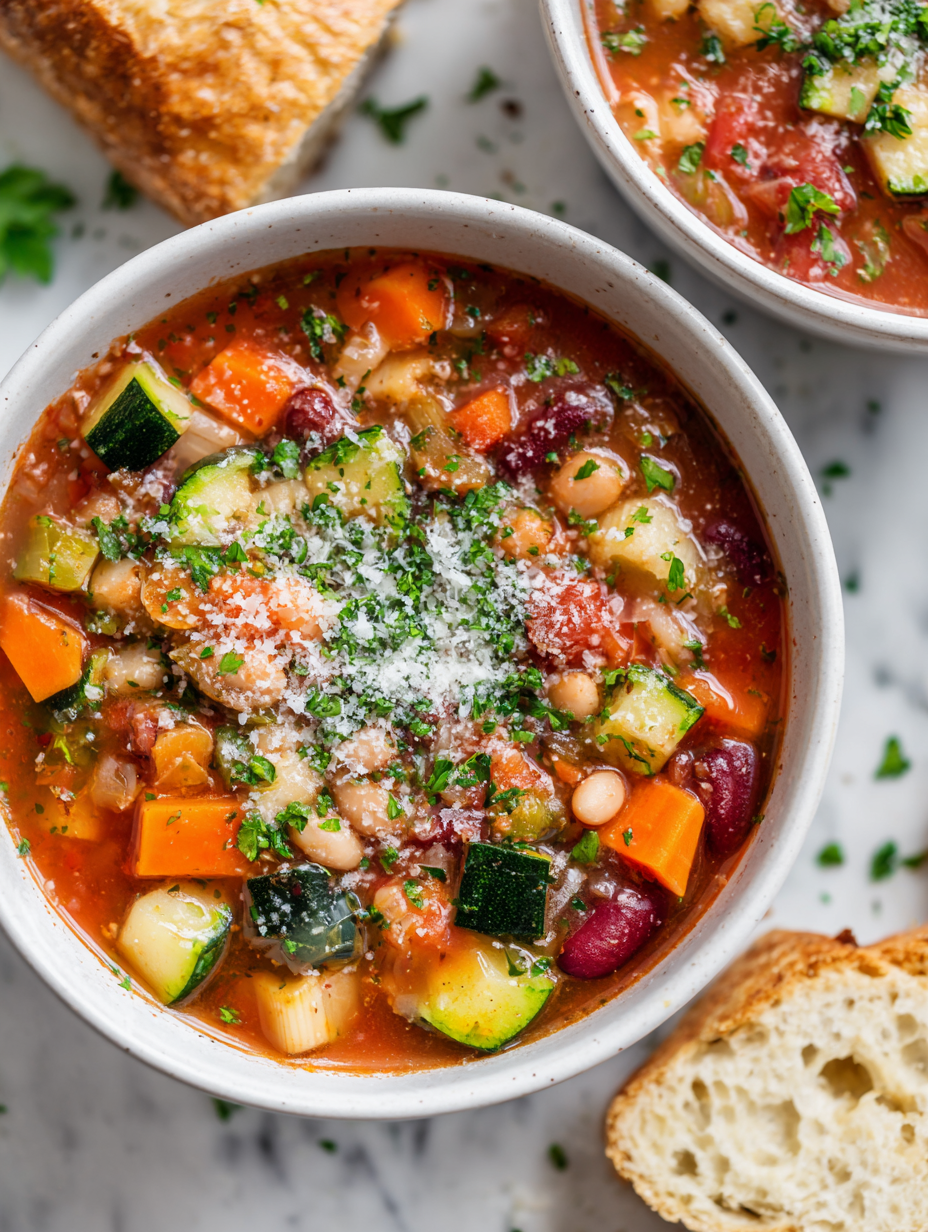
Slow Cooker Minestrone Soup
Ingredients
Equipment
Method
- Start by chopping the carrots, celery, and onion into small, even pieces for quick, uniform cooking.
- In a skillet, heat the olive oil over medium heat. Add the diced onion, carrots, and celery. Cook, stirring occasionally, until fragrant and slightly softened, about 5 minutes. This deepens the flavor and fills your kitchen with a warm aroma.
- Transfer the sautéed aromatics to your slow cooker. Add the crushed tomatoes, rinsed dried beans, vegetable broth, bay leaf, and chopped kale if using. Stir everything together with a wooden spoon until well combined.
- Set the slow cooker to low and cook for 6 to 8 hours, or on high for 3 to 4 hours. The longer cook time allows the flavors to meld beautifully, and the beans become tender and creamy.
- About 30 minutes before serving, stir in the small pasta shapes. Cover and cook on high until the pasta is tender, roughly 20-30 minutes. Keep an eye on the broth—add a splash more if it gets too thick.
- Remove the bay leaf and taste the soup. Adjust salt, pepper, and herbs as needed. Stir in chopped fresh basil right before serving for a fragrant, peppery note.
- Let the soup sit off heat for a few minutes to settle and thicken slightly. Serve hot, garnished with extra basil or grated Parmesan if desired. Enjoy a comforting bowl of homemade minestrone, full of tender vegetables and hearty beans.
Pro tips for perfect minestrone
- Bolded mini-head: Sauté aromatics carefully → Aim for a fragrant, slightly caramelized base before adding liquids.
- Bolded mini-head: Use fresh herbs at the end → Brighten the soup with fragrant basil or parsley just before serving.
- Bolded mini-head: Keep pasta al dente → Add pasta 20-30 minutes before serving and avoid overcooking to prevent mush.
- Bolded mini-head: Adjust broth consistency → If too thick, stir in hot water or additional broth to reach preferred texture.
- Bolded mini-head: Skim foam early → Remove foam that rises to the surface during initial simmer for a cleaner flavor.
- Bolded mini-head: Layer flavors gradually → Add dried herbs early, fresh herbs later, for a balanced aromatic profile.
- Bolded mini-head: Taste and season at the end → Adjust salt, acid, and herbs after cooking for a well-rounded flavor.
Common mistakes and how to fix them
- TOO MUCH LIQUID: Dried pasta absorbs broth; reduce liquid or cook longer to thicken.
- OVERCOOKED BEANS: Check for tenderness at 6 hours; overcooking makes them mushy.
- MISTAKENLY SKIPPING SOAK: Rinse beans thoroughly if not soaked; reduces gas and cook time.
- UNDERRIPE VEGETABLES: Use fresh, firm carrots and celery for better flavor and texture.
Quick fixes and pantry swaps
- If soup is too thin, splash in a cornstarch slurry and stir until thickened.
- When beans are undercooked, add a splash of hot water and cook on high for 15 minutes.
- Dumped too much salt? Rinse the soup with cold water and start with fresh broth.
- Over-torched the garlic? Quickly stir in a splash of lemon juice to brighten the flavor.
- Shield delicate pasta from overcooking by adding it later and checking for al dente texture.
Prep, store, and reheat tips
- Chop vegetables the night before; store in an airtight container in the fridge for up to 24 hours. The fresh, crisp aroma will remain lively.
- Soak dried beans overnight; drain and refrigerate. This shortens cooking time and keeps the beans tender and creamy, avoiding that stubborn bite.
- Prepare everything but the pasta a day ahead; keep ingredients separate. The flavors deepen overnight, making the soup richer and more layered.
- Store leftovers in an airtight container in the fridge for up to 3 days. The broth develops a slightly more concentrated, savory aroma, perfect for reheating.
- Reheat gently on the stove over low heat, stirring occasionally, until steaming hot. The aroma of simmered tomatoes and herbs should be inviting, not burnt.
Top questions about minestrone soup
1. Can I use canned beans instead of dried?
Yes, using canned beans speeds things up and keeps the texture tender. Just rinse well to remove excess salt and sliminess.
2. Can I add frozen vegetables instead of fresh?
Absolutely. Frozen vegetables like spinach or zucchini work well and keep the soup vibrant and fresh-tasting.
3. How do I keep the broth from becoming cloudy?
To keep the broth clear, avoid over-stirring after adding pasta and remove the bay leaf before serving.
4. My soup tastes flat. What can I do?
If the soup tastes flat, a squeeze of lemon or a dash of vinegar can brighten the flavors just before serving.
5. How can I make the soup more flavorful at the end?
Adding a splash of good olive oil or a sprinkle of Parmesan right before serving enhances richness and depth.
6. Can I make this vegetarian?
For a vegetarian version, swap out chicken broth for vegetable broth and add extra herbs or a splash of soy sauce.
7. How do I serve the soup nicely?
Use a slotted spoon to serve, especially if there’s excess broth. It helps to get a balanced spoonful of vegetables, beans, and pasta.
8. How should I store and reheat leftovers?
Leftovers keep well in the fridge for up to 3 days. Reheat gently on the stove until steaming, not boiling, to preserve texture.
9. The pasta is mushy after reheating. What now?
If the pasta absorbs too much broth and gets mushy, add a splash of hot water during reheating or cook pasta separately and add later.
10. How do I fix bland or off-balance soup?
Adjust salt and seasoning after the initial cook. Sometimes a pinch of sugar or a splash of vinegar balances acidity and sweetness.
Making this minestrone in the slow cooker turned into a quiet ritual for me. The gentle simmering fills the house with a warm, inviting aroma that sticks with you long after the bowl is gone. It’s a simple reminder that good, honest food has a way of grounding even the busiest days.
And honestly, there’s something deeply satisfying about coming home to a pot that’s been quietly working its magic. Every spoonful is a little moment of calm, a taste of home that feels just right for right now—whether it’s a hectic weekday or a lazy weekend afternoon.